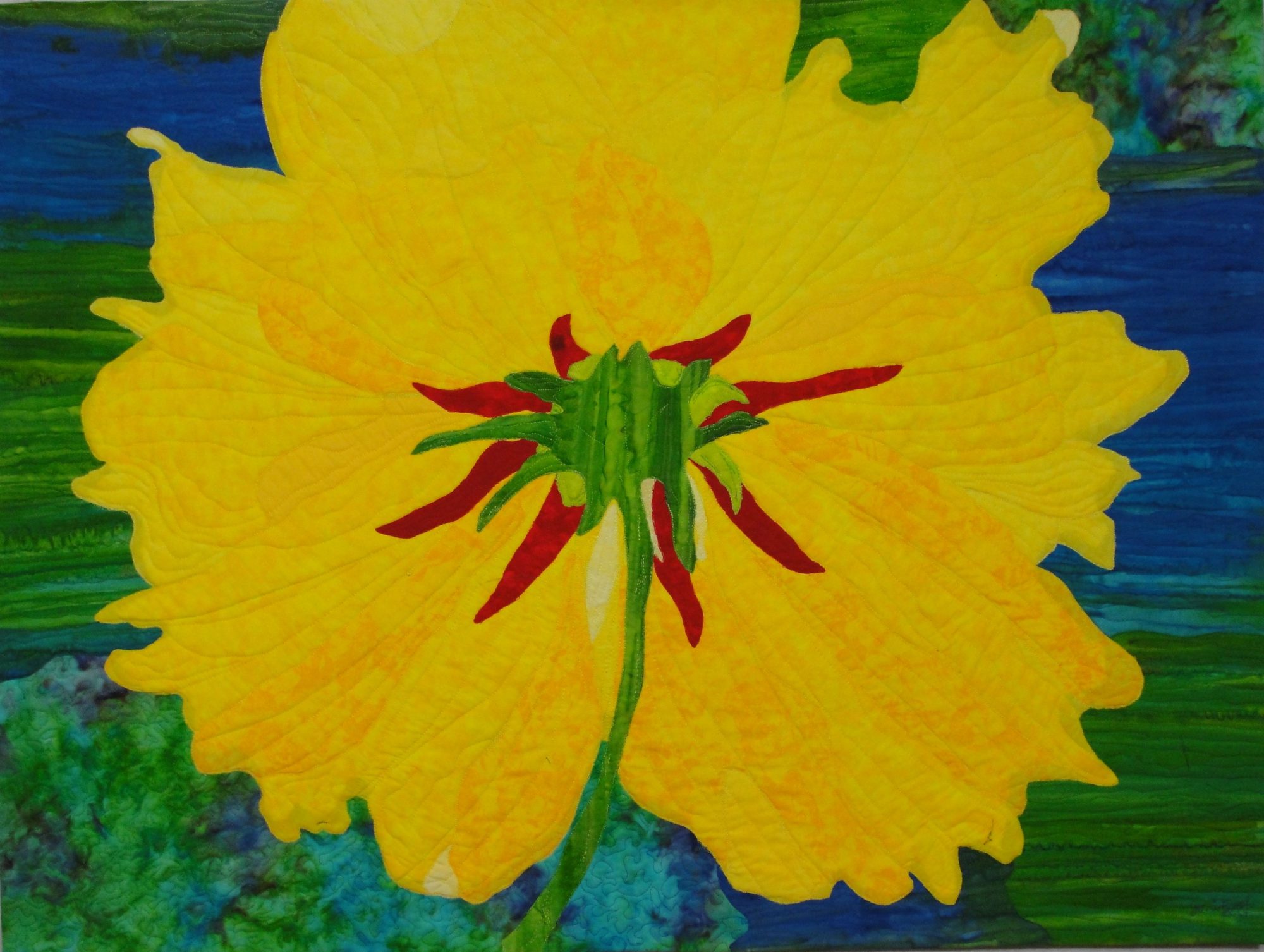
Observing the World…From a Log Bench

Log BenchViewing on-line photo tours of other people’s travels provides me with an amazing suitcase-free, passport-free, ticket-free way to see the world. The traveler’s blog usually includes views of local artisans making their sculptures, fabrics, paintings, or other such craft from local materials, such as in the blog bigBang studioHindustan textiles, food and painting, or in Blogchucuto–Spanish mosaic tiles. Most feature the use of organic materials + the artist’s ingenuity to make a log into a sculpture, clay into a vase, or fabric into a garment. They give a glimpse of the wide variety and unique design aesthetics and motifs from cultures @ the globe.

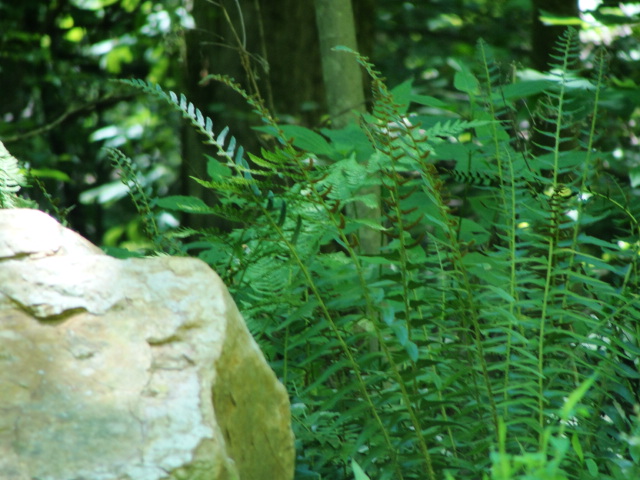
I am still surprised by my enjoyment of items made from organic materials found close at hand. For example, my husband made me a meditation bench for along our driveway using a split log. It is not merely a natural piece of art that I appreciate, but after getting the mail I can also stop, sit, and read, pausing to take-in the woods @ me–the ferns in the shade along the stream and the sounds of nature. Fern In the WoodsWhen walking by in a hurry, I do not always pause, observe, and listen. Walking for many years in the town where we lived, I came to know specific trees, certain flowers and plants in gardens and yards, places different groundhogs had homes, and unique views of the mountains. While riding along in a car, that is not always possible. As you walk, you are more a part of the environment vs. speeding past and through it.

So I guess today I am rambling a bit…but I’d say this article is about how people all over the world use their ingenuity (and creativity) to make works of art by using the natural materials @ them. Plus, while travelling, one can observe and take notice of the worlds @ them to gain inspiration and renewal

Just like a trip up the driveway for the mail and back…
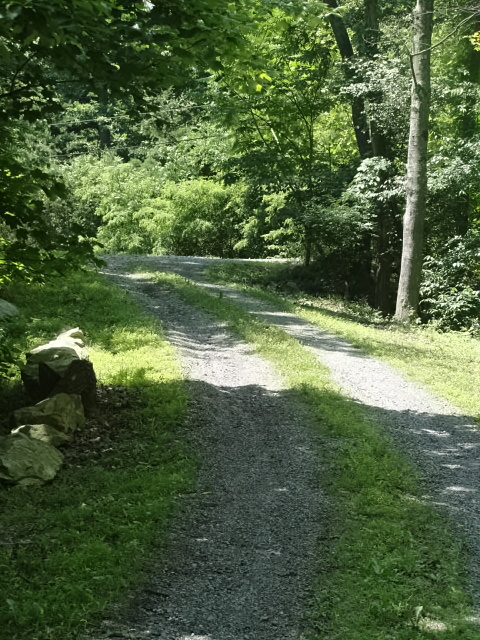
Walk up the Driveway

with a pause on a log bench.

Where do you sit to observe the world?
Be Inventive!

The other day an article in our local newspaper, entitled “3 THINGS you should do today”, caught my eye. Number 2 was “Be inventive”. On May 22nd, 1906, the Wright brother’s US patent was issued for their invention, the “Flying Machine”.

First Flight, John T. Daniels via Wikipedia Commons

Reading the article made me think about how the brothers had to dream of flying, imagine what it would take to soar above the ground, and experiment with many different ideas to make it happen…The brothers’  invention of the flying machine is a perfect example of human creativity and the design process necessary to not only imagine but actually succeed in inventing something new.

Bela Banathy (1991), an educator, systems design scientist, and author, writes that we create the future by the process of designing what we can envision…This is a skill each of us are called upon to use everyday in our families, our work—as artists as well as other occupations, and the communities where we live. Our survival and quality of life is hinged upon our ability as individuals, and collectively as a society, to use our imaginations. Imagination leads to new, novel ideas and inventions that meet the challenges we and our children will face in the coming years.

Technology is one field where change is happening rapidly. The world has had to realize the changes this industry brings and envision ways its benefits can be used for the good, negating any negative effects.  Living @ a research university with its questioning environment inspires me to think of the possibilities–considering new answers to complex problems.  Whether it be…                                                                               at home…                                                                       Flying Bird                                                                                                    in the studio…                                                                                                                                                                           or in our communities…

                                             Are you ready to fly?

…(2011, May 22). 3 THINGS you should do today. NRV CURRENT, THE ROANOKE TIMES, p. 3.
Banathy, B. H. (1991). Systems Design of Education: A Journey to Create the Future. New Jersey: Education Technology Publications.

Image Citation–By John T. Daniels [Public domain], via Wikimedia Commons

Family Fridays—“Look For the Helpers”

Because of the unusually intense tornado season throughout the US this spring, I decided to begin today posting Family Fridays.

Confusion
Transitions #2: Confusion, © 2005 Joni Beach

So many families, particularly in the South, Mid-West, and Northeast, are reeling from the sudden destruction of their worlds and daily lives. The rest of us are left to watch in amazement and, perhaps, feel some guilt at being relieved that it was not us. Of course, whether a tornado or another crisis, we sometimes wonder, “how would we deal with such circumstances?”

In studies of family stress, Froma Walsh discusses what people need whenever they experience an unexpected crisis. What contributes to helping them to cope, recover, and be resilient? Two very important factors are social support and resources, such as after the tornadoes–water, food, shelter, and medical aid. When a sudden crisis happens, people and their families find themselves quickly needing immediate help from others.

I often wonder how to make sense of this type of life event myself. Recently, I heard the story of Fred Rogers‘ (TV’s Mister Rogersanswer for making sense of scary things. As a child, Fred’s mother always told him to “look for the helpers”. For some reason, this was very helpful to me. While it does not change the bad thing that has happened, “looking for the helpers” gives me a way to focus on something positive and reassuring in the midst of it all. And, I know by personal experience that whenever life has been especially challenging, it was the help of other people who made it possible for me to cope. Looking for the helpers after these intense storms, we see real life examples of the needed social support being given to people, which helps them through a crisis, and how important that help really is…

May we all have helpers when we need them, and may we be helpers whenever we can…

Walsh F. (2003). Family resilience: Strengths forged through adversity. In Froma Walsh (Ed.),  Normal Family Processes (3rd ed., pp. 399-423). New York: Guilford Press.

**I’d love to hear your comments!